
Running has become one of my favorite things to do and the best running watches make it easier for me. When I am looking for the best watch, I want a device that can support my training, track my performance accurately, and remain comfortable enough to wear every day.
A good running watch does much more than simply record time and distance. It provides insights into pace, recovery, and overall fitness so I can better understand how my body responds to training. Features such as reliable GPS tracking, clear displays, and strong battery life help me stay focused on my runs without distractions. With the right combination of performance tracking and everyday convenience, a running watch can become an essential tool for improving consistency and reaching new running goals.
Best Running Watches
1)Garmin Forerunner 965
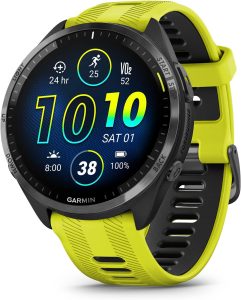
The Garmin Forerunner 965 is widely regarded as one of the best running watches for athletes who want advanced performance data with a premium design. It features a brilliant AMOLED touchscreen display paired with traditional button controls, giving runners flexible navigation during workouts. The lightweight titanium bezel keeps the watch comfortable for long runs while adding durability. With a physical size of 47.2 x 47.2 x 13.2 mm and a fit range for wrists measuring 135 to 205 mm, it balances performance capability with everyday wearability.
Battery performance is impressive for a high-performance GPS watch. The watch delivers up to 23 days of battery life in smartwatch mode and up to 31 hours in GPS mode, making it suitable for extended training blocks and long-distance events. Multi band GNSS with SatIQ technology improves location accuracy even in challenging environments such as cities or dense tree cover while also optimizing power consumption. Full color built in maps allow runners to confidently explore new routes without relying on their phone.
Training insight is another strong area of the device. The training readiness score analyzes sleep quality, recovery, HRV status, and training load to estimate whether the body is ready for intense activity. Training status also evaluates recent exercise history and performance indicators to show whether workouts are productive, peaking, or causing strain. Each morning the watch delivers a detailed report that summarizes sleep, recovery, weather, and the overall training outlook for the day.
The watch also supports structured training and multisport activities. Runners can plan race strategies with personalized daily suggested workouts that adapt after each run based on performance and recovery data through the Garmin Connect app. Built in sport profiles make it easy to switch between triathlons, duathlons, swimruns, and brick workouts with a single button press. Advanced wrist based running dynamics such as cadence, stride length, ground contact time, and running power provide detailed insights that help athletes refine technique and manage effort more effectively.
Pros
- Bright AMOLED display with responsive touchscreen and button controls
- Long battery life for both smartwatch and GPS tracking modes
- Highly accurate multi band GNSS with SatIQ technology
- Advanced training metrics including HRV status and training readiness
- Built in color maps for route navigation
- Detailed running dynamics and wrist based running power
Cons
- Premium price compared with many running watches
2) POLAR Pacer SmartWatch
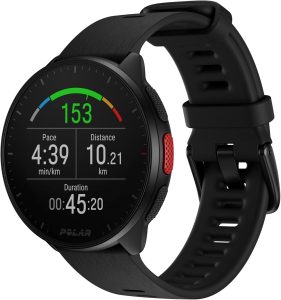
The Polar Pacer is a reliable running watch designed for athletes who want simple performance tracking without unnecessary complexity. It focuses on delivering the core tools runners need to monitor progress and stay consistent during training. The watch features a crystal clear MIP color display that remains easy to read in bright daylight. Its straightforward interface makes it suitable for both experienced runners and beginners who want quick access to essential workout information.
The watch provides the key running metrics needed for everyday training. Runners can track time, pace, distance, laps, and stopwatch functions directly from the display while staying focused on their workout. The integrated GPS records each step and turn to provide accurate route and distance data. This allows athletes to review performance after a run and better understand their pacing and movement throughout the session.
Battery performance is well suited for frequent training. The device can deliver up to 35 hours of battery life on a single charge in training mode, allowing runners to complete many workouts before needing to recharge. When power save mode is activated, the watch can extend battery life up to 100 hours, which is helpful for longer endurance events or extended outdoor activities. This flexibility makes the watch dependable for a wide range of running schedules.
Ease of use is one of the most appealing aspects of the watch. The design works comfortably for both men and women, and the simple control layout allows runners to start workouts quickly without navigating complicated menus. With clear data presentation and reliable GPS tracking, the watch supports runners who want dependable performance monitoring while keeping the experience uncomplicated.
Pros
- Clear always on MIP color display that is easy to read outdoors
- Accurate GPS tracking for pace, distance, and routes
- Long battery life with up to 35 hours in training mode
- Extended power save mode reaching up to 100 hours
- Simple interface that is easy to learn and operate
- Comfortable design suitable for men and women
Cons
- Fewer advanced training metrics compared with premium running watches
3)SUUNTO Race S GPS Sports Watch
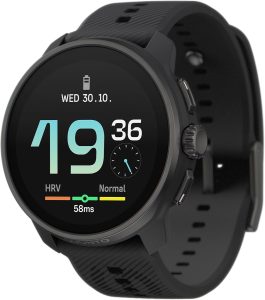
The Suunto Race S GPS Sports Watch is a compact yet powerful running watch designed for runners who want detailed performance tracking and outdoor navigation in a lightweight form. It features a 1.32 inch high resolution AMOLED touchscreen with 466 dpi, delivering sharp visuals that remain easy to read in different lighting conditions. A digital crown adds another way to scroll through menus quickly, making navigation smooth during workouts. Weighing about 60 grams and measuring only 11.4 mm thick, the watch feels comfortable for all day wear while the silicone strap options allow users to choose a style that suits their preference.
Battery life remains impressive considering the bright AMOLED display. The watch can deliver up to 30 hours in performance mode with the best GPS accuracy, which is suitable for long training sessions and endurance races. In everyday use, the battery can last up to 13 days before needing a recharge. Fast charging support means the device can reach a full charge in about an hour, making it convenient for athletes with busy schedules who need their watch ready for the next session.
Location accuracy is strengthened by dual band GNSS tracking using L1 and L5 signals. The watch can receive signals from five satellite systems including GPS, GLONASS, GALILEO, QZSS, and BEIDOU, helping maintain accurate tracking even in dense cities or complex outdoor environments. Global offline maps with zoom capability, route navigation, points of interest, and find back navigation support runners and outdoor enthusiasts exploring unfamiliar routes. Additional tools such as a barometer based storm alert, sunrise and sunset alarms, altimeter, and compass provide useful environmental awareness.
The watch also supports health tracking and structured training analysis. It monitors heart rate, blood oxygen levels, sleep quality, calories burned, and daily step count while also offering menstrual cycle tracking through the Suunto app. More than 95 preset sports modes allow users to record a wide range of activities from running and cycling to climbing and paragliding. Advanced metrics such as HRV, VO2 max, TSS, CTL, and TSB help athletes analyze workouts in detail, while insights from the AI Coach and integration with over 300 partner services through the SuuntoPlus ecosystem enhance long term training planning.
Pros
• Bright high resolution AMOLED display with touchscreen and digital crown navigation
• Lightweight and thin design that remains comfortable for all day wear
• Dual band GNSS tracking with support for multiple satellite systems
• Global offline maps with advanced navigation and outdoor tools
• Wide range of sports modes and detailed training metrics
• Fast charging with solid battery life for both training and daily use
Cons
• AMOLED display may consume more battery compared with simpler screen types
4)Garmin Forerunner 265
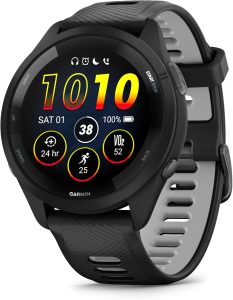
Another Garmin on our review is the Garmin Forerunner 26. This feature rich running watch is designed for runners who want advanced training insights in a lightweight and comfortable device. It comes with a bright AMOLED touchscreen display combined with traditional button controls, giving runners flexible navigation whether they prefer touch interaction or physical buttons during workouts. The 46 mm design keeps the watch lightweight while still providing a large and easy to read screen that works well during runs and everyday use.
Battery performance supports consistent training without frequent charging. The watch offers up to 13 days of battery life in smartwatch mode and up to 20 hours in GPS mode, which is suitable for daily workouts and longer endurance sessions. Multi band GNSS with SatIQ technology improves positioning accuracy when running in complex environments such as urban areas or wooded trails. The system also helps manage power usage efficiently so runners can rely on precise route tracking throughout their activities.
Training insight is a major advantage of the watch. Each morning users receive a detailed morning report that summarizes sleep, recovery status, HRV data, weather, and the overall training outlook for the day. The training readiness score evaluates sleep quality, recovery level, HRV status, and recent training load to estimate whether the body is prepared for a demanding workout. Training status further analyzes performance indicators and exercise history to help runners understand if they are progressing productively, peaking for an event, or pushing too hard.
The watch also helps runners prepare for races with structured guidance. Through the Garmin Connect app, users can enter race details and receive personalized daily suggested workouts that adapt after every run according to performance and recovery. More than 30 built in activity profiles cover running, triathlons, cycling, open water swimming, and other activities, making the watch suitable for multi sport training. Safety features such as incident detection and assistance can send live location alerts to emergency contacts when paired with a compatible smartphone, adding extra reassurance during outdoor workouts.
Pros
• Bright AMOLED display with touchscreen and physical button controls
• Lightweight 46 mm design that remains comfortable during long runs
• Reliable multi band GNSS with SatIQ technology for accurate tracking
• Advanced training insights including HRV status and training readiness
• Personalized daily workout suggestions for race preparation
• Wide range of activity profiles for running and multisport training
Cons
• Shorter GPS battery life compared with some ultra endurance watches
Related Posts:6 Best Outdoor Wrist Watches
5)COROS PACE 3 GPS Sport Watch
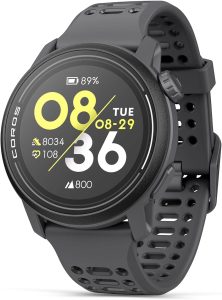
The COROS PACE 3 GPS Sport Watch is a lightweight running watch built for runners who value comfort, endurance, and reliable performance tracking. Designed with an ultra slim 11.7 mm profile and a featherweight build of about 30 grams with the nylon band, the watch feels almost unnoticeable on the wrist. This makes it comfortable enough for continuous wear throughout training sessions, sleep tracking, and daily activity. Its durable construction also allows runners to train confidently in different conditions without feeling weighed down.
The watch features a 1.2 inch always on transflective touchscreen that remains easy to read in bright outdoor light. The display includes adjustable backlight modes such as always on, navigation and activity, or navigation only, giving runners flexibility depending on how they want to use the watch during workouts. This screen technology helps conserve battery while still presenting clear workout information such as pace, distance, and time.
Battery performance is one of the strongest aspects of the watch. It offers up to 38 hours of continuous GPS tracking, which supports long training sessions, races, and endurance events. In daily smartwatch use, the battery can last up to 24 days on a single charge, allowing athletes to focus on training instead of frequent charging. The watch also uses a redesigned dual frequency satellite chipset to maintain accurate GPS tracking even in complex environments such as high-rise cities. It can also record air pressure and elevation gain for more detailed outdoor activity data.
Navigation and activity tracking features add further versatility for runners and multisport athletes. The route planner in the COROS app allows users to create custom routes or search for destinations and then sync the navigation directly to the watch. Breadcrumb navigation helps keep runners on the correct path while still showing key workout metrics. The watch supports a wide range of activity modes including running, trail running, cycling, swimming, strength training, snowboarding, skiing, and cross-country skiing, making it suitable for both everyday training and seasonal sports.
Pros
• Extremely lightweight and comfortable design for long term wear
• Long battery life with up to 38 hours of GPS tracking
• Dual frequency GPS improves accuracy in complex environments
• Clear transflective touchscreen display designed for outdoor visibility
• Route planning and breadcrumb navigation support exploration
• Wide selection of activity modes for different sports
Cons
• Touchscreen may be less responsive when wet during some activities
6)Garmin Forerunner 165
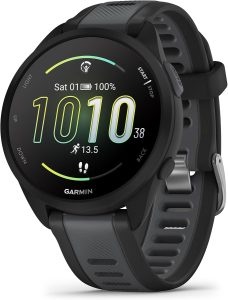
This user-friendly Forerunner 165 from Garmin is designed for runners who want reliable tracking and useful training tools in a compact design. It includes built- in GPS for accurate pace and distance tracking along with wrist-based heart rate monitoring. The watch features a bright AMOLED touchscreen display combined with traditional button controls, allowing runners to interact with the device in different ways during workouts. With its lightweight 43 mm case, the watch feels comfortable for both daily wear and long training sessions.
Battery performance supports regular training without frequent charging. The device provides up to 11 days of battery life in smartwatch mode and up to 19 hours in GPS mode. This allows runners to complete multiple workouts and daily activities before needing to recharge. Built in GPS records routes and pace information accurately, helping runners monitor performance and track improvements over time.
Training guidance plays a major role in the watch experience. Personalized daily suggested workouts adapt according to performance and recovery to help users maintain balanced training. Garmin Coach and race adaptive training plans provide structured programs designed for specific race goals. Each morning the watch delivers a report summarizing sleep, recovery, weather conditions, and HRV status to help runners understand their readiness for the day.
The watch also supports a variety of fitness activities beyond running. More than 25 activity profiles cover exercises such as cycling, HIIT, and strength training, making it useful for cross training. Users can also download songs and playlists from compatible services like Spotify, Amazon Music, and Deezer for phone free listening when paired with wireless headphones. Safety features such as incident detection and assistance can share live location with emergency contacts when the watch is connected to a compatible smartphone.
Pros
• Bright AMOLED display with touchscreen and button controls
• Lightweight 43 mm design that feels comfortable during workouts
• Personalized daily workout suggestions and training plans
• Built in music storage for phone free listening
• Multiple activity profiles for different types of training
• Safety features that can share location with emergency contacts
Cons
• Shorter battery life compared with some endurance focused watches
You might also like:
6 Best Outdoor Adventure Watches
Factors to Consider when Choosing the Best Running Watches
Display Quality and Readability
The display plays a major role in how easily you can view your training data while running. A good running watch should offer a clear screen that remains visible in bright sunlight as well as low light conditions. Some watches use AMOLED displays for vibrant colors and sharp visuals, while others use transflective screens that are easier to read outdoors and consume less power. The screen size, brightness, and touch responsiveness all contribute to how convenient it is to check pace, distance, or heart rate during a workout.
Battery Life
Battery performance is an important consideration for runners who train frequently or participate in long distance events. A watch with strong battery life can last many days in smartwatch mode and several hours or even days in GPS tracking mode. This allows runners to complete long runs, races, or multi day activities without worrying about charging the device constantly. Longer battery life also makes the watch more reliable for everyday use.
GPS Accuracy and Navigation
Accurate GPS tracking ensures that distance, pace, and route data are recorded correctly. Many modern running watches use advanced satellite systems or dual frequency tracking to improve accuracy in challenging environments such as cities with tall buildings or dense forests. Some watches also include navigation tools such as route planning, breadcrumb trails, or buil- in maps that help runners explore unfamiliar routes without getting lost.
Training Metrics and Performance Insights
Advanced training metrics help runners understand how their workouts affect fitness and recovery. Many watches track data such as heart rate variability, training load, recovery time, and aerobic performance. These metrics provide insights into whether the body is adapting positively to training or experiencing fatigue. Having access to this information allows runners to make better decisions about when to push harder and when to rest.
Coaching and Workout Guidance
Some running watches include built in coaching features that provide structured workouts and training plans. These tools can offer daily workout suggestions based on recent activity, recovery status, and performance trends. Runners preparing for races may benefit from adaptive training plans that adjust as their fitness changes. This type of guidance can help maintain consistency and reduce the risk of overtraining.
Activity and Multisport Support
Many runners also participate in other forms of exercise such as cycling, swimming, or strength training. A watch with multiple activity profiles allows users to track different types of workouts while keeping all fitness data in one place. Multisport capabilities are especially useful for athletes who train for events that combine several disciplines.
Comfort and Design
Comfort is essential since a running watch is often worn throughout the day and during sleep. A lightweight design with a comfortable strap helps reduce wrist fatigue during long runs. The size of the watch should also fit well on the wrist so that it does not feel bulky or restrictive during movement. Durable materials are beneficial for runners who train in various weather conditions or rugged environments.
Smart Features and Safety Tools
Additional features can enhance the overall experience of using a running watch. Some devices offer music storage for phone free listening, smartphone notifications, or app connectivity for reviewing workouts in detail. Safety tools such as incident detection and location sharing can provide extra reassurance for runners who train alone, allowing emergency contacts to be alerted if an accident occurs during an activity.
Frequently Asked Questions: Best Running Watches
What features should I look for in the best running watch?
When choosing a running watch, it is important to consider features that support both training and everyday usability. Key elements include accurate GPS tracking, reliable heart rate monitoring, and long battery life for extended workouts. Many runners also benefit from training insights such as recovery analysis, workout suggestions, and performance tracking. A clear display, comfortable design, and support for multiple sports activities can further improve the overall experience.
How important is GPS accuracy in a running watch?
GPS accuracy is very important because it determines how precisely your watch measures distance, pace, and route information. Accurate tracking helps runners analyze their performance and maintain the correct pacing during workouts and races. Watches that use advanced satellite systems or dual frequency tracking can provide more reliable results, especially in areas with tall buildings, dense trees, or other obstacles that may interfere with satellite signals.
How long should the battery last on a good running watch?
Battery life depends on how often you train and how you use the watch, but a good running watch should last several days in smartwatch mode and many hours in GPS tracking mode. Longer battery life is especially useful for marathon runners, trail runners, and athletes who participate in endurance events. Efficient battery performance allows you to focus on training and racing without needing to recharge the watch frequently.
Final Thoughts
Choosing the best running watch ultimately depends on what I need from my training and how I prefer to track my progress. Some runners prioritize advanced performance metrics and coaching tools, while others focus on simplicity, comfort, and long battery life. By considering factors such as GPS accuracy, training insights, design, and additional smart features, I can find a watch that supports both my workouts and my daily routine. The right running watch not only records my runs but also helps me train smarter, stay motivated, and continue improving over time.